
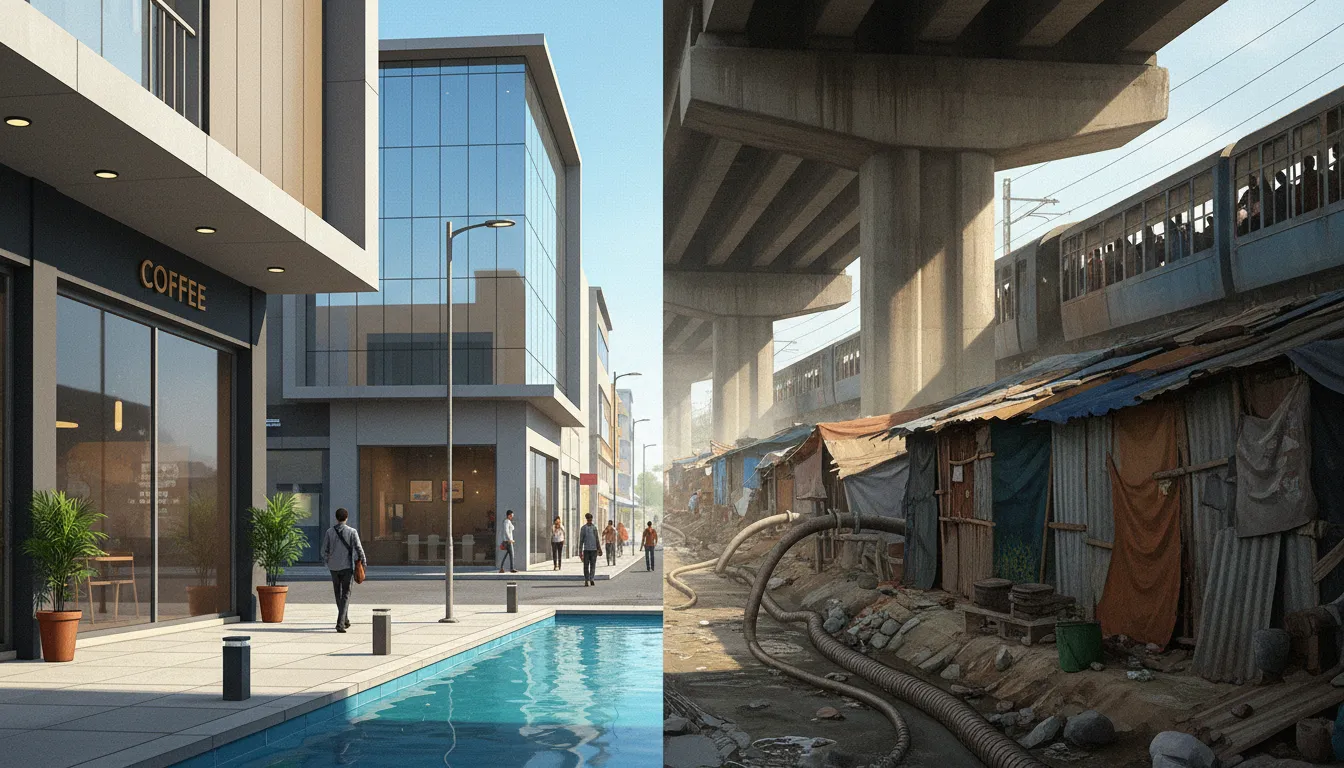
I came back to Siliguri with a plan.
Not the usual plan either. No wandering straight into the rough edges. No beginning with chaos, filth, and crumbling streets. This time I wanted to do the opposite. I wanted to see whether you could live like a king in Siliguri, a city that many people would dismiss without a second thought.
And that, really, became the theme of the journey. Not just comfort versus discomfort, but two Indias existing side by side. One with coffee shops, polished hotels, shopping malls and swimming pools. The other with people living under bridges, pumping water connected to dirty rivers, and cramming themselves into railway compartments that no human being should be expected to endure.
India does this to you. It gives you absurdity, beauty, generosity, exhaustion, and shock, often before lunch.
Table of Contents
- Siliguri, but with money in your pocket
- Flurys and the polished face of the city
- Malls, clothes, and the performance of wealth
- The part of Siliguri you cannot ignore
- Leaving Siliguri and heading north
- Indian general class: the real thing
- Why general class is both horrible and important to experience
- The frozen train, the crowds, and the honesty of ordinary people
- Cooch Behar, near Bangladesh, and a surprising hotel gem
- The final push to Assam
- Standing by the toilet in general class
- What this says about Indian Railways
- Poverty on the move
- Assam at last
- India is brilliant, difficult, and occasionally unbearable
- What I took away from the journey
- FAQ
Siliguri, but with money in your pocket
The first order of business was simple enough. If I was going to do the “live like a king” version of Siliguri, then I needed the best hotel in town.
That turned out to be the Ramada Encore, where around £40 a night bought a room far better than many people would expect in this corner of India. Big bed, clean interior, solid furnishings, and a view over the city. It was one of those moments where even I had to admit surprise. If your idea of Siliguri is all potholes and grime, there is another side to it.

That was the point I wanted to make early. People sneer at places too quickly. Somewhere can be scruffy, disorganized, and still contain pockets of comfort. In India especially, extremes live next door to each other.
After sorting the room, I headed out for the rich man’s circuit. If you are going to spend money properly, then you begin with coffee and cake. Naturally.
Flurys and the polished face of the city
The destination was Flurys, described as the fanciest café in Siliguri. A polished place with an old-fashioned air, nice service, nice cakes, and the sort of atmosphere that makes you momentarily forget the chaos outside. It felt tidy, controlled, almost colonial in spirit, and entirely at odds with the rougher image many people hold of the city.
That is one of the curious things about traveling in India. You can leave one street lined with dust and stray dogs and, ten minutes later, sit down somewhere serving proper coffee in elegant cups as though you have stepped into another world.

At Flurys there was also the sort of encounter that happens constantly on the road in India. Somebody recognized me. A subscriber appeared out of nowhere in Siliguri, which felt ridiculous and brilliant at the same time. He probably expected me to spend the day mocking his city. Instead he found me praising it.
And deservedly so, at least on that side of town. If you have money in Siliguri, you can eat well, dress well, and pass a very agreeable afternoon.
Malls, clothes, and the performance of wealth
There is something slightly theatrical about trying to “live like a king” in a place where most people are decidedly not doing that. So naturally I leaned into the performance.
I went to the fanciest mall, browsed the fanciest menswear shop I could find, and bought some new clothes. Good service, polished surroundings, proper retail presentation. The sort of thing that could be anywhere in the world, really. That global middle-class shopping mall culture has spread far and wide, and even in a city better known as a transport hub than a luxury destination, it exists.
Then, dressed in my fresh “kingly” clobber, I went searching for the sort of establishment where a man of status ought to linger with a drink in hand.
That was the joke running through the day. Hotel, café, mall, restaurant, bar. Tick the boxes. Pretend, for a moment, that this is what Siliguri really is.
But of course it isn’t. Not for most people.
The part of Siliguri you cannot ignore
After the polished version came the real version.
Backpacker Ben had found a different side of the city, one that no amount of coffee and cake can conceal. We jumped in a rickshaw and headed toward a bridge over a river. The promise was that it would be “beautiful.” In a way, it was. Not in the postcard sense, but in the way raw human life can be beautiful and brutal at the same time.
Under and around that bridge were families living in makeshift corrugated shacks. Children ran about cheerfully. People smiled, greeted us, and carried on with the day. Nearby was a well. The problem was that the water pumped from that well effectively came from the river beside it.
And the river was filthy.
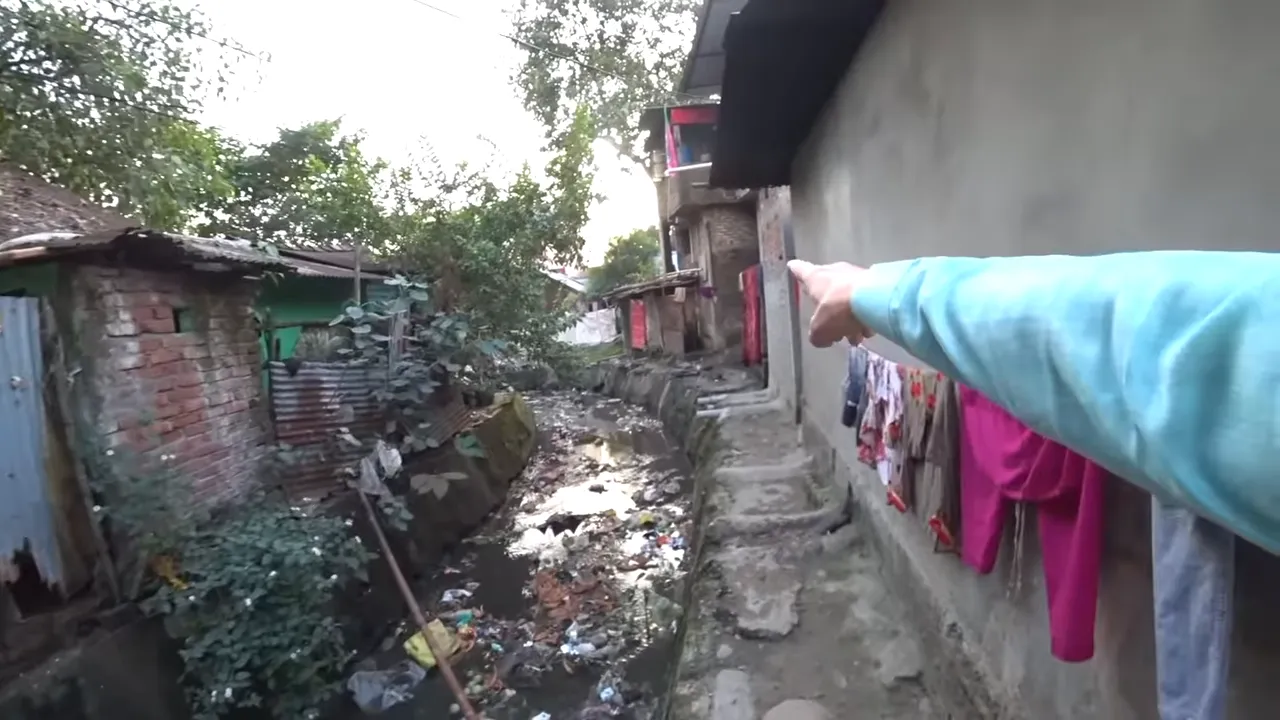
That is where the “live like a king” idea collided head-on with reality. Because here was the other Siliguri, the one hidden just far enough from the polished hotel lobby. Same city. Same day. Entirely different existence.
Many of the people living there belonged to the same caste community, with local shrines and images of Hanuman, the monkey god, reflecting the rhythms of neighborhood religion and identity. Children were smiling, people were friendly, and there was a strange jolliness in the middle of deprivation.
That jolliness is something outsiders often struggle to understand. It is not that poverty is somehow noble. It isn’t. It is grim, limiting, unfair, and often physically dangerous. But people adapt. They make homes where they can, build social worlds around hardship, and somehow keep hold of humor and warmth.
The more uncomfortable thought is this: would you keep your cheerfulness in the same conditions? It is easy to speak loftily about resilience from a clean hotel room.
And there is another hard truth that cannot be ignored. The caste system, however modern India may be in some places, still locks many people into inherited social realities they did not choose. That does not explain every case of poverty, but it forms part of the background to why whole communities remain stuck at the bottom.
By this point the day had already delivered its lesson. Siliguri was not one thing. It was all of it. The cappuccino and the contaminated water. The hotel suite and the shack by the river.
Leaving Siliguri and heading north
The next stage was travel. Real travel, not the sanitized kind. We were heading out through North Bengal toward Cooch Behar, with Assam beyond that.
Indian railway stations are their own universe. Ticket windows, confusion, noise, chance encounters, people selling all manner of things, old relics from the British period still standing around as if empire packed up and left but forgot the furniture.
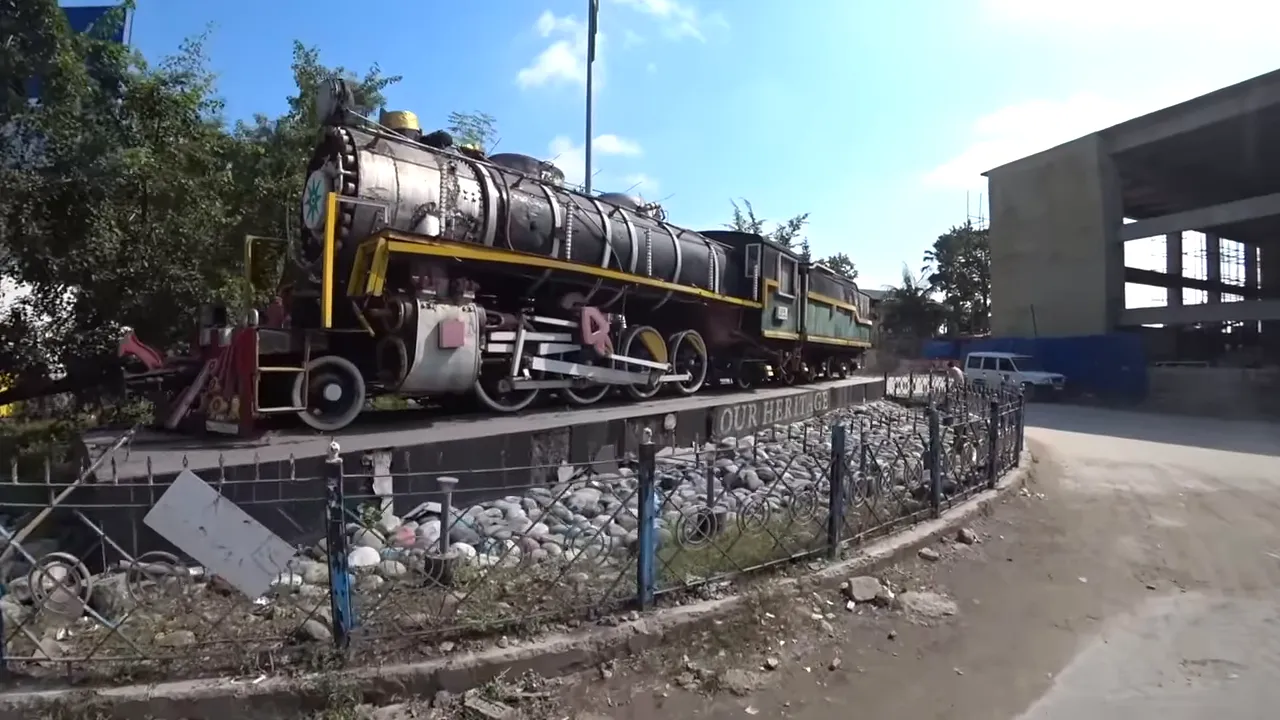
Outside Siliguri Railway Station sat an old British train engine, a reminder that the railway network remains one of the most visible inheritances of colonial rule. The British built railways for imperial convenience and extraction, but those lines became part of the bloodstream of modern India.
In stations and on trains, you also feel the scale of the country. Soldiers bound for the northeast. Laborers heading for distant states. Families carrying everything they own. The railway is not just transport. It is migration, survival, duty, pilgrimage, escape, and routine all rolled together.
Before entering the chaos proper, we sampled the “Executive Lounge,” a little comic interlude where for a brief moment we could pretend to be men of status once again. Executive this, executive that. Warren Buffett one minute, Donald Trump the next. All nonsense, obviously. But that contrast mattered, because the very next thing waiting for us was the famous and feared general compartment.
Indian general class: the real thing
If you want the full reality of train travel for many poor Indians, this is it. Not air-conditioned sleeper class. Not reserved berths. Not the tourist-friendly version.
General class is the unreserved compartment where people pile in with no guarantee of a seat, little personal space, and often no comfort whatsoever. It is travel stripped of dignity and reduced to pure necessity.
The first sight of it already told the story. People tossing litter out the windows. Plastic bags flying onto the tracks. A carriage bursting with bodies. Faces crammed into every available gap.

That detail about the litter matters more than it might seem. India has enormous problems with waste management, yes, but there is also an ingrained habit in many places of simply throwing rubbish out into the world and letting it become someone else’s problem. On trains, the landscape outside often becomes the bin.
Then came the real challenge: getting in.
Inside was bedlam. A mass of people, noise, movement, and bodies packed so tightly that every inch had to be negotiated. Somehow I managed to clamber up onto a luggage rack, where conditions were strangely more tolerable. Ben, meanwhile, was already nearing his limit.
That became another recurring theme of the journey. I was perversely enjoying parts of the madness. Ben was inching toward a proper breakdown.
Why general class is both horrible and important to experience
It would be easy to write off the whole experience as just “crazy India,” have a laugh, and move on. But that misses the point.
General class is horrible, yes. It is overcrowded and unsanitary. But it is also how vast numbers of people travel because they have no practical alternative. For them this is not a stunt, not a travel anecdote, not something to be monetized as a bit of on-the-road madness. It is simply what they can afford.
And yet the people were, by and large, remarkably friendly.
That was one of the sharpest contradictions of the trip. Material conditions could be utterly grim while the human atmosphere remained unexpectedly warm. Strangers smiled, made space where none existed, chatted, laughed, and seemed genuinely amused by the presence of foreign oddballs in their carriage.
You cannot help but notice the disparity. Two Westerners doing this for “the experience,” while the people around them do it because this is the system available to them. They may be traveling for many more hours, even days, through these same conditions.
That is where any comedy gives way to something more serious.
The frozen train, the crowds, and the honesty of ordinary people
At one point the train sat motionless for around an hour near a small town, with no real movement and no obvious urgency. That too is part of Indian rail travel. Delays happen. Plans dissolve. Time stretches. People sit, stand, squat, wait.
But there was a detail I noticed and admired. Despite the crowding and the chaos, my bag remained untouched. Say many things about India, and there are many things to say, but ordinary Indians often show a level of honesty that travelers notice quickly. People may have very little, but theft is not nearly as constant a threat as it might be in some other difficult travel environments.
That does not mean romance. It means nuance. India forces nuance on you whether you want it or not.
Cooch Behar, near Bangladesh, and a surprising hotel gem
Eventually we reached Cooch Behar, up in the north near the Bangladesh border, a place most foreign travelers never bother with. Clean streets, a calmer feel, and far fewer of the rough urban pressures we had just come from.
Then came one of those great travel surprises. We found a genuinely impressive hotel for the same rough price as the Siliguri room, around £40 again, and this one had all sorts: a proper gym, a tennis court, and even a swimming pool.

The pool was a bit green, admittedly, but the overall place felt like a hidden gem. That is one of the joys of traveling beyond the standard route. Sometimes in unfashionable towns you find excellent value and a strange kind of grandeur.
Cooch Behar also had a palace to tempt us, the old Maharaja’s Palace, a reminder that before integration into modern India this region had its own princely history. The palace dates back to the era of the local rulers and reflects the layered political history of Bengal, princely states, and eventual incorporation under British influence and then independent India.
We went to see it and were promptly told that filming was not allowed.
That, too, is India. A magnificent historical site and a bureaucratic rule that makes no obvious sense. You ask why. Nobody knows. It simply is.
So after all that, we looked from the outside and moved on.
The final push to Assam
From Cooch Behar the aim was to push on to Assam, specifically toward Guwahati. But travel plans in India are more like suggestions than commitments. The bus we wanted had already gone. The next one was much later. The palace visit had cost us time, and now we were back at the railway station confronting a grim reality.
The only realistic option was another general class ticket.
Ben was not impressed. In fact, “not impressed” is far too mild. He was approaching spiritual collapse.
I, meanwhile, was half-amused and half-curious to see just how bad this next segment could get.
Standing by the toilet in general class
The answer was: very bad indeed.
There were no seats. None. We ended up standing by the toilet, where the smell was immediate and relentless. The floor was filthy. The atmosphere was miserable. This was no longer colorful chaos. It was simply degrading.

Ben had had enough almost instantly. He wanted off at the next station. He said it was not funny anymore, and he was right. There comes a point where the travel banter stops and basic standards of human dignity come into focus.
Then I made the mistake of looking directly into the toilet area.
Human waste on the floor. Not metaphorically. Literally. At that point even I had to concede that this was beyond the usual “roughing it” talk. This was unacceptable. Nobody should be forced to spend hours next to that.
And that is where the title of the whole journey truly lands. Nobody should live like this. Nobody should have to travel like this either.
You can admire the resilience of poor people. You can praise their friendliness. You can find humor in mishaps. But none of that should become an excuse for conditions that are plainly inhumane.
What this says about Indian Railways
Indian Railways is one of the great railway systems on earth in scale alone. It moves an extraordinary number of people across an enormous country. In many ways it is an engineering and logistical miracle.
But miracles can still fail people.
The general compartments expose the ugliest side of the system:
-
Overcrowding that turns travel into an endurance event.
-
Unsanitary toilets that become health hazards.
-
Lack of seating for people making long journeys.
-
Poor waste handling, including rubbish simply being swept out of the carriage onto the tracks.
-
A two-tier reality where those with money can escape the worst, and those without must endure it.
I even watched a cleaner sweep rubbish from a compartment straight out of the train door. Bottles, wrappers, all of it. Problem solved by relocating the mess into the countryside. That tells you something about the wider systems at work. It is not merely one dirty train. It is a culture of inadequate public infrastructure mixed with habits that worsen the problem.
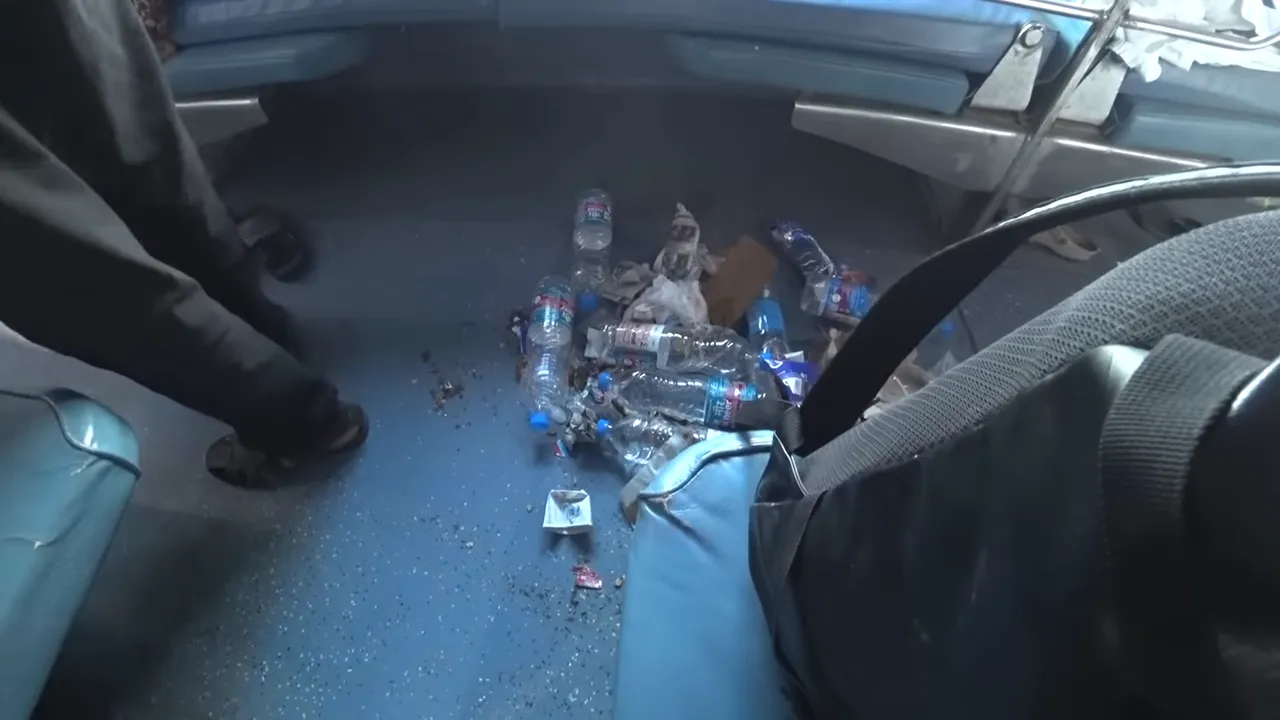
Eventually we escaped the toilet-adjacent hell and slipped into sleeper class without proper tickets, hoping to negotiate with the conductor. Whether by charm, confusion, or simple railway flexibility, we managed to avoid immediate disaster.
Compared with the previous compartment, it felt luxurious.
Poverty on the move
Even once out of the worst of the general carriage, the train continued to show the broader social reality.
A blind dwarf being guided through the carriage by a child while trying to beg for money is not the sort of image that leaves you quickly. It compresses a lot into one scene: poverty, disability, absence of welfare, family dependence, and the sheer improvisation people must rely on to survive.
That is another thing travelers often misunderstand about India. The spectacle is obvious, but beneath it lies a constant struggle for livelihood. Not everybody has a safety net. Not everybody can stop working when they are ill, old, injured, or vulnerable. People find ways because they must.
Assam at last
At some point the train entered Assam, and with that came a small shift in mood. The name itself carries romance, especially for anyone raised on old British imaginings of the region: tea plantations, jungles, elephants, tigers, distant frontier lands.
Assam marks the beginning of the northeast, a region that feels different in geography, culture, and political history. It has long been strategically important, which is one reason you often see military movement in this corridor. It is the gateway to borderlands, hills, and all the complexity of India’s northeastern states.
By then, though, romantic thoughts were struggling against a much more immediate concern.
Both of us felt rough. Very rough. Stomach trouble was setting in, likely picked up during the joys of general class. Ben, in a declaration that summed up the entire trip, announced that this was his last time in India, ever.
Naturally, these sorts of declarations are often made while sweating, sleep-deprived, and several hours into digestive distress.
Still, it captured the emotional whiplash of the place. India can make even seasoned travelers swear they are done forever, right before some stranger smiles at them, helps them, and talks them into reconsidering the whole thing.
India is brilliant, difficult, and occasionally unbearable
By the end, that was the honest conclusion.
India has serious issues. Not minor ones. Big structural issues.
-
Sanitation remains inadequate in too many places.
-
Poverty is visible and harsh.
-
Public transport for the poorest can be intolerable.
-
Waste management is often dreadful.
-
Social inequality remains deeply rooted.
But there is also something else that the country has in abundance: people. Good people. Funny people. Curious people. Generous people. People who will strike up a conversation on a station platform, guide you to your train, ask where you are from, invite you to their home, or simply grin through conditions that would leave many others permanently furious.
That does not erase the criticism. In fact, it sharpens it. Because if ordinary people can be that decent under those conditions, then they deserve much better conditions.
The trip from Siliguri through Cooch Behar and on into Assam showed both sides of India more clearly than any curated itinerary could. The nice hotel and the shack under the bridge. The café and the contaminated water. The hidden gem with a tennis court and the train toilet coated in filth. The executive lounge and the luggage rack in general class.
That is the country. Not one or the other. All of it together.
What I took away from the journey
If there was a lesson in the whole thing, it was not simply that India is chaotic. Everybody knows that cliché already.
The more useful lessons were these:
-
Comfort in India is available, but unevenly distributed. With enough money, you can shield yourself from a lot. Without it, the country can be brutally hard.
-
General class is an education. If you want to understand how millions actually move around the country, there is no substitute for seeing it up close.
-
The friendliness of ordinary Indians is real. It is not a travel cliché. It shows up again and again, often in the least comfortable situations.
-
Poverty should never be romanticized. Resilience is admirable, but no child, family, or laborer should be expected to thrive in filth.
-
India is worth experiencing precisely because it is so intense. It can horrify you and charm you on the same day.
Would I go back? Probably, yes. Even after all that. Maybe especially after all that.
Because however maddening India can be, it rarely leaves you feeling nothing. And in a world full of forgettable places, that counts for a lot.
FAQ
What is general class on Indian trains?
General class is the unreserved compartment on Indian trains. Passengers do not have assigned seats, and carriages can become extremely crowded. It is the cheapest way to travel and often the harshest, especially on long-distance routes.
Is train travel in India always this bad?
No. India has many different classes of train travel. Air-conditioned and reserved sleeper classes can be far more comfortable. The worst conditions are usually found in unreserved general compartments, which many poorer passengers rely on because of cost.
Where are Siliguri and Cooch Behar located?
Both are in West Bengal in eastern India. Siliguri is a major transport hub connecting the northeast, Darjeeling, and nearby borders. Cooch Behar lies farther north, closer to Bangladesh, and is known for its princely history and palace.
Why was the contrast in Siliguri so striking?
Because the city showed two completely different realities in a very small area. One side offered quality hotels, cafés, malls, and comfortable urban life. Another side revealed severe poverty, poor sanitation, and families living in makeshift homes near dirty water sources.
Is Assam worth visiting?
Yes, especially if you are interested in India beyond the standard tourist circuit. Assam is associated with tea gardens, wildlife, and the broader culture and geography of India’s northeast. It also serves as a gateway to several fascinating borderland states.
What was the main takeaway from the journey across West Bengal into Assam?
The main takeaway was that India contains extreme contrasts. There is generosity and warmth alongside severe public health and infrastructure problems. The people can be wonderful, while the conditions many of them endure are plainly unacceptable.